PintereAI





无间 新作|院半:城市与自然之间,各取其“半” 首
2026-01-07 19:56


宁波·院半户外艺术生活馆
都市的高密度与高强度常常让人感到情绪起伏,因此,在这种环境下,人们愈发渴望与自然建立紧密联系,寻找一个能够放松身心的空间。自然,本身携带着稳定而温和的力量,当人置身其中,身体会在无形中慢慢松弛下来。
YARDCOM院半,源于谦逊的东方智慧——取其半,成其全。“半”是一种在进退之间保持平衡的态度。无间设计以前瞻性的视野,与YARDCOM院半合作实践,开创了东方户外生活的新方式。设计,将需求与思考结合起来,把产品、空间、艺术体验与生活方式连接成一个完整的品牌体系,为现代生活呈现一种介于内与外、城市与自然、艺术与日常之间各取其半,自成其美的状态。
Urban density intensifies our need for natural connection—a space where the mind and body can soften. Nature holds a steady, gentle power that allows us to unwind.
YARDCOM (院半) is rooted in the Eastern wisdom of “taking half to form the whole”—a philosophy of balance. In partnership with Yardcom, W.DESIGN integrates aspiration and design, weaving product, space, art, and lifestyle into a cohesive brand. Together, they create a mode of living between city and nature, art and everyday—where each half contributes to a complete, harmonious whole.


宁波·院半户外艺术生活馆
我们希望设计呈现的,是一个既能连接自然,又真正为生活而存在的空间。在宁波·院半户外艺术生活馆这个空间里,完美的呈现不仅来自设计本身,还来自生活中的真实体验。结合YARDCOM院半的户外家具系列,我们将场地精神与传统文化结合,带给都市人一种更安定心绪和雅致的园艺时光。这个空间回应了东方人对山水园林的审美感知,也指向一种未来的生活想象——在城市之中,与自然建立一种长期而亲密的连接,使其成为可持续、可以反复感受的日常状态。
YARDCOM (院半) is rooted in the Eastern wisdom of “taking half to form the whole”—a philosophy of balance. In partnership with Yardcom, W.DESIGN integrates aspiration and design, weaving product, space, art, and lifestyle into a cohesive brand. Together, they create a mode of living between city and nature, art and everyday—where each half contributes to a complete, harmonious whole.


在对东方园林的理解与现代生活方式的结合中,我们看到了自然与时间的交织。位于宁波的院半户外艺术生活馆正是这一理念的具象化表达。江南造园素以层叠掇景、曲径通幽见长,是一种步入其中被时间慢慢包围的体验,是喧嚣之外的片刻停顿,更是日常生活中自我关照与延展的场所。基于这样的理解,
我们将品牌的核心理念提炼为五重感知——自然感、时光感、东方感、工艺感与生活感,回应人们对当代栖居的期待。
Ningbo lies within the Jiangnan region. Jiangnan gardens have long been celebrated for their layered views and winding paths leading to tranquility — an experience of being gradually enveloped by time as one steps inside. For contemporary urban life, however, the garden has taken on another layer of meaning: a pause from the noise, an extension of self-care within the repetition of daily reality. Guided by this understanding, we have distilled five core sensibilities that define the brand: a sense of nature, a sense of time, an Eastern sensibility, a respect for craft, and an authentic sense of living — responding to what people today seek in dwelling.


传统园林内敛,以高墙围合一方静谧天地。而在都市空间中,设计更需要与外界保持呼吸,延展感知的边界。无间设计以全域开放的空间策略,消弭展厅的边界,使空间自然融入周围环境之中,唤起对户外无边无际的联想——自然的呼吸,视线的呼吸,气息的呼吸,空间在流动中获得生机。
Traditional gardens turn inward, enclosing tranquility within high walls. In urban settings, however, space must breathe with its surroundings, stretching the boundaries of perception. W.DESIGN adopts an open spatial strategy, dissolving the edges of the exhibition space so it blends naturally into the environment. While presenting nature, it also engages the senses — each turn, each play of light evokes the boundless quality of the outdoors. Here, breath flows between nature, sight, and atmosphere — bringing the space to life through movement.


在东方美学的脉络中,宋徽宗以其诗、书、画、园、茶的全方位艺术追求,将美学的探索与生活的仪式融为一体。其《听琴图》中,文人围坐于林石之间,遒遒劲松之下,清音在山野回响。画中之石,无需雕饰,自成席位、观景之台、器物之基。它既来自自然,又被纳入人之使用,游走于山水与日常之间。
Emperor Huizong of the Song Dynasty explored aesthetics and ritual through poetry, calligraphy, painting, gardens, and tea — distilling an enduring Eastern legacy of cultivated grace. In his Listening to the Qin, scholars gather among trees and rocks beneath ancient, twisting pines, as clear notes echo through the mountain air. The stone in the painting, unadorned, becomes seating, a viewing platform, and a base for objects. Originating from nature, it enters human use — moving between landscape and everyday life.


这一幅画,唤起我们对于石的重新理解:是否存在一种物,它不被定义为家具、展台或雕塑,却在山林间,静静承接生活的每一次触碰?
This inspires a question: can an object exist beyond categories like furniture or sculpture, yet intimately engage with life through touch and presence in nature?


这正是我们在宁波·院半户外艺术生活馆的设计中所追求的理念。整个空间的路径逐级向上,引导观者从城市的纷繁热闹中抽离,缓缓步入一段“归山”的心路。人工切割的置石与裸露天然的岩面交织共生,看似略带野性却完美地平衡了空间的柔和气质。空间中的“野逸”与“克制”相得益彰,始终保持着一种“生长”的状态。
The ascending pathway guides visitors from urban bustle toward a mental return to the mountains. Cut stone and raw rock surfaces intertwine — appearing wild yet balancing the space’s softness, restrained yet free, maintaining the space in a state of growth.


“归山”之路,既见嶙峋山石叠错,又时闻潺潺流水清响。行至水穷处,忽觉尘嚣如潮退,惟余泠泠漱石声,心境徐徐落入一片空澈澄明之中。
On the path of returning to the mountain, one encounters jagged rocks rising layer upon layer, while the gentle murmur of a stream is heard from time to time. Arriving where the water ends, the worldly noise suddenly recedes like the tide, leaving only the crisp sound of water washing over stone. The mind then settles slowly into an emptiness, clear and bright.

《胡杨林·三》任天进
顾客坐下、抚触、驻足,身体在不经意间成为感知的器官。这些未被完全定义的物,正暗合院半产品的内核——它们有时是椅,有时是石——在空间中犹如句读,留下余白,也生成节奏。空间像是用岩石雕刻出的立体画布,岩石封存地质的深时,而家具则承载人居的温度。二者交汇,在此成为一种丰盈的生活想象,“可生长的经典”逐渐浮现:一种始终在路上的生活提案,留给未来以开放的空间。
Sitting, touching, pausing — the body naturally becomes an instrument of perception. Yuanbans objects exist between chair and stone, like punctuation in space, creating rhythm through restraint. This rock-carved canvas blends geological time with human warmth, forming a vision of slow living — a growing classic that remains open to the future.


所谓“户外”,我们不将它定义为某种功能的延伸,而是一种日常与环境联结的方式,是一段与自然共同发生的过程。庭院不再是静态景观,而是一个持续生成、可体验的生活空间。在传统园林中,建筑只需以最直接的逻辑回应环境:恰当的尺度、合宜的体量、得体的方位,便成一处亭、一座阁、一间茶寮。功能与风景便会在彼此成就中达成默契。
而在现代设计中,我们摒弃了具象的院落符号,以近乎雕塑的方式勾勒空间原型。它像一块未被完全雕琢的石坯,处在完成与未完成之间的状态。人在其中看见山石崚嶒,有人感知岁月肌理,而院半的家具正是从这片留白中生长出来——既像是从岩石中自然发芽,又随时能被赋予新的生命场景。
We move beyond literal courtyard symbolism, shaping spatial archetypes with a sculptural approach — like an unfinished stone block, hovering between completion and raw potential. Some see rugged mountain rocks, others sense the texture of time. Yuanbans furniture emerges from this very negative space — appearing to grow naturally from the stone, yet always ready to adapt to new living contexts.


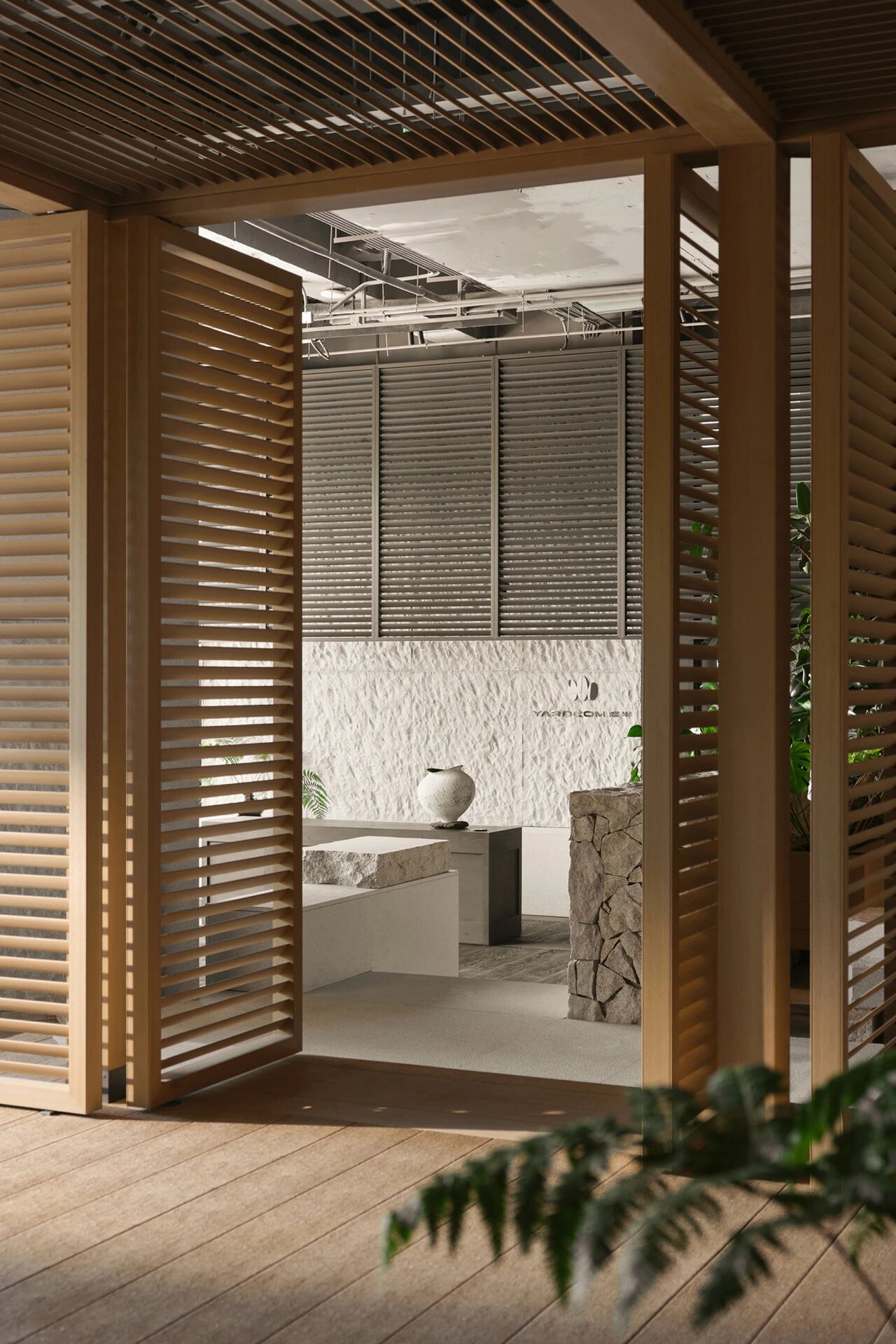
木格栅取代传统的实体隔墙,创造一种半透明、非固定的空间边界,重新定义了“亭”、“台”、“茶寮”的概念。光与风穿行其内,竖横之间,界面开合,既分亦合,空间因此获得延展的张力。视线透过格栅穿景而过,风的走向、树影的摇曳、水汽的涌动都成为空间感受的一部分。
Wooden lattices replace solid walls, organizing space in a semi-transparent and indeterminate manner. Within this framework, elements such as pavilions, platforms, and tea houses fluidly take form. Light and wind permeate the interwoven layers; as interfaces open and close, the space both divides and unifies, acquiring a dynamic tension. Views extend through the lattice, where the drift of wind, the sway of tree shadows, and the drift of moisture all weave into the spatial experience.


真正的静谧,正是在动静之间的微妙平衡。一旁水声潺潺,鸟鸣偶至,自然的回响勾勒出安静的深度。
True tranquility lies in the balance between movement and stillness. The gentle murmur of water and occasional birdsong outline the depth of silence.


茶室空间,不开窗看景,而以灯箱模拟昼夜光线的流转。光线从缝隙溜入,如叶影婆娑洒在墙上,也在户外家具上投射出晨曦与月色交替的轨迹,带来的是一种安静的生命感。
In the tea space, no window opens to a view — instead, a light box simulates the shifting daylight. Soft beams slip through gaps, casting dappled leaf patterns on the walls and tracing the subtle transition from dawn to moonlight across outdoor furnishings.


园中每一座“庭院”之间没有明确的界限,边界是游移的。空间彼此掩映、渗透,在转角之间藏匿着新的场景。视线不断被引导折返,每一个停留都如一次窥探,未见其全貌,已觉其深远。
In the garden, there are no strict divisions between courtyards — only shifting margins. Spaces overlap and interpenetrate, concealing new scenes around each corner. Sight is constantly guided to turn back; each pause becomes an act of glimpsing, sensing depth before seeing the whole.


香料亭藏身于一隅,等待被发现;嗅觉、听觉、触觉在行走中逐一被唤醒——人在观景的同时,也已然成为景中一物。
The Spice Pavilion waits, tucked away in a corner, to be discovered. As one walks, the sense of smell, hearing, and touch are gradually awakened — while observing the scenery, one becomes part of the scenery itself.


院半户外艺术生活馆,是一次关于当代户外生活方式的空间尝试。我们将空间作为载体,将时间、工艺、自然与身体感知融为一体,让空间成为激活感官、延展体验的容器,成为一处持续生成、可游、可栖、可感的生活风景。
YARDCOM Outdoor Art - Living Pavilion reimagines contemporary outdoor living. Here, space becomes a vessel blending time, craft, and nature to activate the senses. Outdoor is not mere function, but a way to connect with the environment — a dynamic process with nature. The courtyard transforms into evolving scenery to wander, dwell, and feel.


户外生活的意义,关乎空间的塑造,更在于空间如何被感知与经历。具有生命力的庭园,应当能随季节律动、光影流转而不断演变,春水涨落、夏蝉鸣响、秋叶翻飞、冬光斜照,皆在其中留下时间的痕迹。
无间设计与YARDCOM院半的合作,从国际舞台上的理念表达,到具体产品、空间与运营体系的落地实践,始终以东方精神为根基,力求在当代生活中寻找清晰而开放的表达方式,让庭园成为连接自然、生活与精神的真实场所。
这正是我们所期待的下一代庭园——“当下”不在远,它是一方不断通向精神内里的空间提案,以穿越时空、超越感官的生活哲学,深刻影响着每一个与之相遇的人。
The essence of outdoor living lies in how space is shaped, felt, and lived. A living garden evolves with the seasons — spring waters, summer cicadas, autumn leaves, winter light — each leaving traces of time. Our design explores how to weave together spirit, sensation, and time, creating an outdoor experience that awakens awareness of rhythm and scale through daily use.
From conceptual expression on the international stage to the tangible integration of product, space, and operations, the partnership between W.DESIGN and YARDCOM is rooted in Eastern sensibility. It seeks clear yet open forms of expression for contemporary life, transforming the garden into a genuine connector of nature, living, and spirit — and positioning the brand as an evolving, globally-minded Eastern voice.
This is the next-generation garden we envision — a spatial proposition where the present is never distant, always leading inward.
设计总监-无间创始人
吴滨

项目主创团队

本文图文版权归W.DESIGN无间设计所有
室内设计:W.DESIGN 无间设计
软装设计:W.DESIGN 无间软装
项目名称:院半户外艺术生活馆
业主:YARDCOM院半
设计面积:600㎡
项目地址:中国宁波
完工时间:2025年03月
策划:Bobo Zhou
摄影:Howie Zheng
撰文/编辑:Ricardo、华婷、KK



推荐作品


相关文章
-
2018年走过了四分之一,LOGO设计趋势也清晰了LOGO设计
-
2018年走过了四分之一,LOGO设计趋势也清晰了LOGO设计
-
2018年走过了四分之一,LOGO设计趋势也清晰了LOGO设计